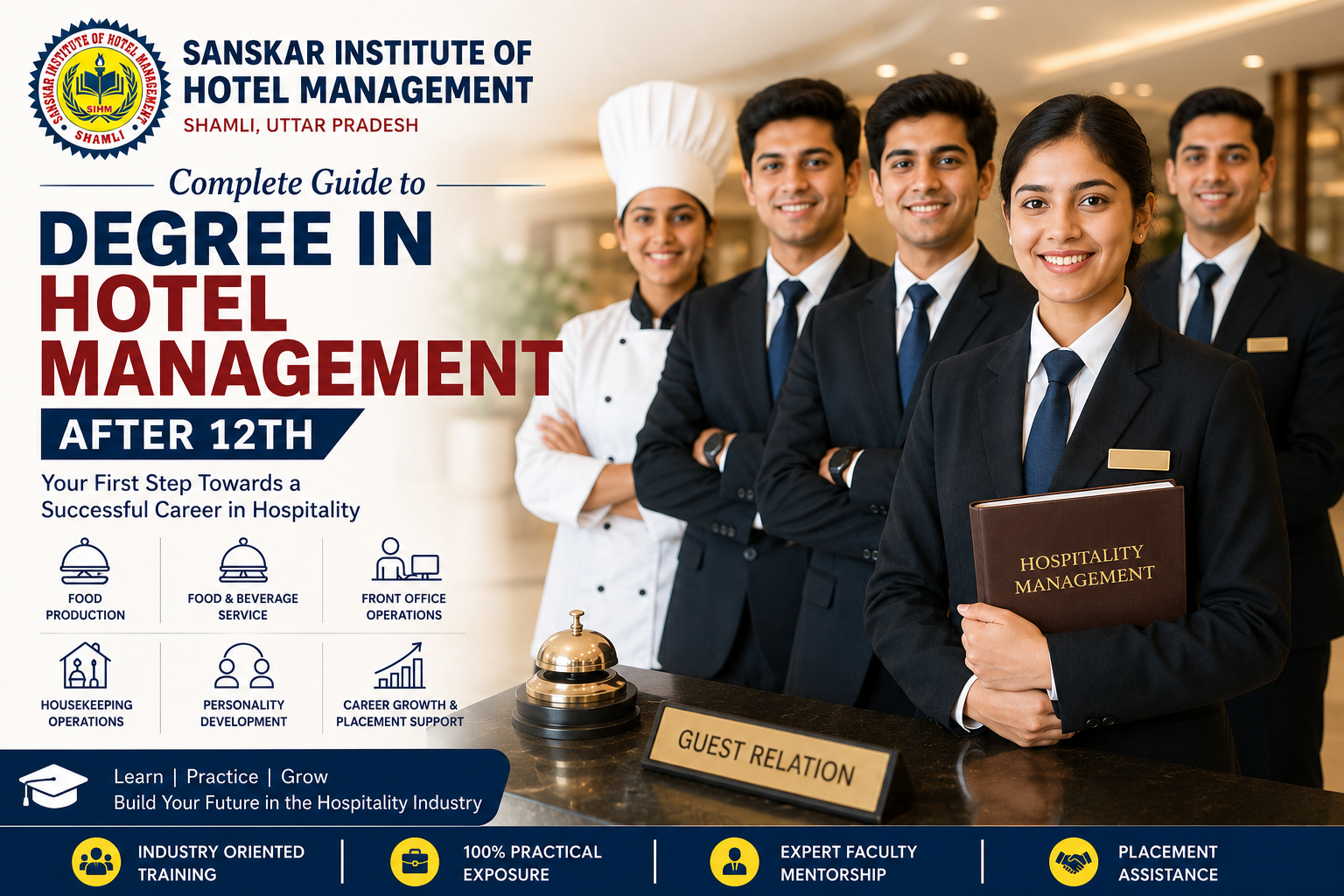
Complete Guide to Degree in Hotel Management After 12th
Choosing the right career after Class 12 is an important decision, especially for students who are interested in hospitality, travel, food, tourism, and customer service. The hospitality industry offers diverse career opportunities across hotels, resorts, restaurants, airlines, cruise lines, event companies, and other service-oriented businesses. For students who enjoy interacting with people, working in dynamic environments, and developing practical professional skills, pursuing a Degree in Hotel Management after 12th can be an excellent career choice. A well-structured degree program combines classroom learning with practical exposure, helping students understand the different departments and operations involved in the hospitality industry. What Is a Degree in Hotel Management? A Degree in Hotel Management is an undergraduate program designed to prepare students for professional careers in the hospitality and service industry. The course generally covers both theoretical concepts and practical aspects of hotel operations. Students are introduced to important areas such as food production, food and beverage service, front office operations, housekeeping, hospitality management, communication skills, and customer relations. The objective is not simply to teach students how a hotel operates. It is also to develop professional qualities such as communication, teamwork, leadership, problem-solving, time management, and attention to detail. Why Choose Hotel Management After 12th? The hospitality industry is known for its wide range of career opportunities and diverse working environments. Students completing their 12th standard can enter this field through specialized undergraduate programs that provide industry-oriented education. Here are some important reasons to consider a hotel management degree after 12th: 1. Diverse Career Opportunities Hotel management graduates are not limited to traditional hotel jobs. Their skills can be useful in hotels, resorts, restaurants, tourism companies, airlines, cruise businesses, catering companies, event management, and corporate hospitality. This diversity allows graduates to explore career paths according to their interests and strengths. 2. Practical and Industry-Oriented Learning Hospitality is a practical industry where professional skills are extremely important. A good degree program gives students opportunities to understand real-world operations through practical classes, training, projects, and industry exposure. This combination of academic knowledge and practical learning can make students more confident when entering the professional world. 3. Development of Professional Skills Hotel management education focuses on much more than technical knowledge. Students can develop communication, interpersonal, leadership, presentation, teamwork, and customer-service skills. These transferable skills can also be valuable in many other service-oriented professions. 4. Opportunities in the Growing Hospitality Industry Hotels and hospitality businesses require trained professionals across different departments. As the industry evolves, employers increasingly value candidates who understand hospitality operations and can deliver professional guest experiences. A degree can therefore provide a structured foundation for students who want to build a long-term career in hospitality. What Do You Study in a Hotel Management Degree? One of the biggest advantages of a hotel management degree is the opportunity to learn about multiple areas of hospitality operations. Depending on the institution and curriculum, students may study subjects related to: • Food Production • Food and Beverage Service • Front Office Operations • Housekeeping Operations • Hospitality Management • Hotel Operations • Communication Skills • Customer Service • Personality Development • Tourism and Travel • Hospitality Marketing • Management Principles • Practical Training Learning about different departments helps students understand how various teams work together to deliver a smooth guest experience. Understanding the Major Departments of Hotel Management Food Production Food production focuses on culinary operations and professional kitchen management. Students learn about cooking techniques, food preparation, kitchen organization, hygiene, safety, and related practices. For students who have a strong interest in culinary arts, this area can become an important career specialization. Food and Beverage Service Food and beverage service deals with serving guests professionally in restaurants, hotels, banquets, and other hospitality environments. Students learn about service techniques, guest interaction, restaurant operations, professional etiquette, and service management. Front Office The front office is one of the most visible departments in a hotel because it involves direct interaction with guests. Students can learn about reservations, check-in and check-out procedures, guest communication, reception operations, and handling guest requirements professionally. Housekeeping Housekeeping plays a vital role in maintaining cleanliness, comfort, hygiene, and overall hotel standards. Students learn about room management, cleaning procedures, housekeeping operations, inventory, and coordination with other hotel departments. Importance of Practical Training One of the most important aspects of hospitality education is practical exposure. Hospitality professionals are expected to apply what they learn in real-world situations, making hands-on training highly valuable. Practical learning can help students understand workplace responsibilities, professional standards, guest expectations, teamwork, and time management. Industry exposure can also help students become familiar with the pace and discipline of hospitality operations before they begin their full-time careers. Skills You Can Develop During a Hotel Management Degree A successful hospitality professional needs a combination of technical knowledge and soft skills. During a degree program, students can work on several important abilities, including: Communication Clear and confident communication is essential when interacting with guests, colleagues, managers, and business partners. Customer Service Hospitality revolves around guest satisfaction. Students learn how to understand guest expectations and respond to requests professionally. Teamwork Hotels involve multiple departments working together. Strong teamwork helps ensure efficient operations and a consistent guest experience. Leadership As professionals gain experience, leadership skills can help them take responsibility for teams and departmental operations. Problem-Solving Hospitality professionals frequently encounter unexpected situations. The ability to remain calm and find practical solutions is therefore extremely valuable. Time Management Hotels operate continuously, and many tasks need to be completed within specific timeframes. Effective time management can improve both productivity and service quality. Career Opportunities After a Degree in Hotel Management A hotel management degree can open doors to a variety of professional roles. Depending on their specialization, skills, experience, and interests, graduates may explore positions such as: • Hotel Operations Executive • Front Office Executive • Guest Relations Executive • Food and Beverage Executive • Housekeeping Executive • Restaurant Manager • Hotel Sales Executive • Event Management Professional • Food Production Professional • Hospitality Supervisor • Customer Service Professional • Resort Operations Professional With experience and additional professional development, graduates can progress toward supervisory, managerial, and leadership positions. Where Can Hotel Management Graduates Work? The hospitality sector extends far beyond conventional hotels. Graduates may explore opportunities across several industries, including: Hotels and Resorts: Luxury hotels, business hotels, boutique properties, resorts, and other accommodation businesses require trained hospitality professionals. Restaurants and Food Businesses: Restaurants, cafés, catering companies, and food service organizations offer opportunities in operations, service, production, and management. Airlines and Airports: Hospitality and customer-service skills can be relevant to various airport and airline-related roles. Cruise Industry: Cruise companies employ professionals across food service, guest relations, housekeeping, entertainment, and other operational areas. Event Management: Hospitality graduates can also explore event planning, conference management, banquets, and corporate events. Tourism Industry: Tourism companies and travel-related organizations can provide additional opportunities for graduates interested in travel and guest services. How to Choose the Right Hotel Management Degree Program Students should carefully evaluate a reputed hotel management institute before selecting a degree program. The name of the course alone should not be the only deciding factor. Consider the following aspects: Curriculum Check whether the program provides balanced coverage of hospitality operations, management concepts, practical training, and professional skills. Practical Exposure Look for programs that provide sufficient practical learning and opportunities to understand real hospitality environments. Faculty and Learning Environment Experienced faculty members and a professional learning environment can contribute significantly to a student's overall development. Industry Exposure Industry interaction, internships, workshops, training, and exposure to professional hospitality environments can add considerable value to the learning experience. Career Support Students should also consider whether the institution provides career guidance, placement assistance, interview preparation, and opportunities to interact with potential employers. Is Hotel Management a Good Career After 12th? For students who genuinely enjoy hospitality, communication, travel, food, customer interaction, and fast-paced professional environments, hotel management can be a rewarding career option. However, students should understand that hospitality careers require professionalism, discipline, flexibility, patience, and a strong commitment to customer satisfaction. Those who are willing to continuously improve their skills and gain practical experience can build a strong foundation for long-term career growth. Building a Successful Career in Hospitality Getting a degree is only the first step. Students can strengthen their career prospects by developing additional professional skills alongside their academic studies. Improving spoken English and communication, learning basic technology and hospitality software, developing leadership abilities, gaining practical experience, and understanding international hospitality standards can all contribute to professional growth. Students should also stay updated with changing customer expectations and trends in the hospitality industry. Start Your Journey with a Degree in Hotel Management For students looking for a structured and industry-focused path into hospitality, choosing the right degree program can make a meaningful difference. A strong program should combine academic knowledge, practical training, professional development, and exposure to real hospitality operations. If you are exploring your options after Class 12, you can learn more about the Degree in Hotel Management program, its course structure, and the learning opportunities available to aspiring hospitality professionals. Conclusion A Degree in Hotel Management after 12th can provide students with a broad understanding of hospitality operations while developing the practical and professional skills required in the service industry. From food production and front office operations to housekeeping, food and beverage service, guest relations, and management, students can explore multiple areas before choosing a career direction. With the right education, practical exposure, communication skills, and professional attitude, aspiring hospitality professionals can prepare themselves for a wide range of opportunities in the hotel and hospitality sector. For students passionate about creating memorable guest experiences and building a career in a dynamic industry, hotel management can be more than just a degree—it can be the beginning of a rewarding professional journey.